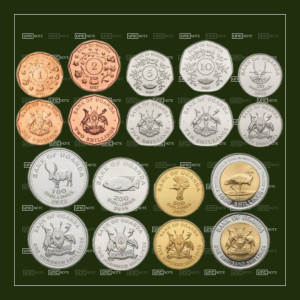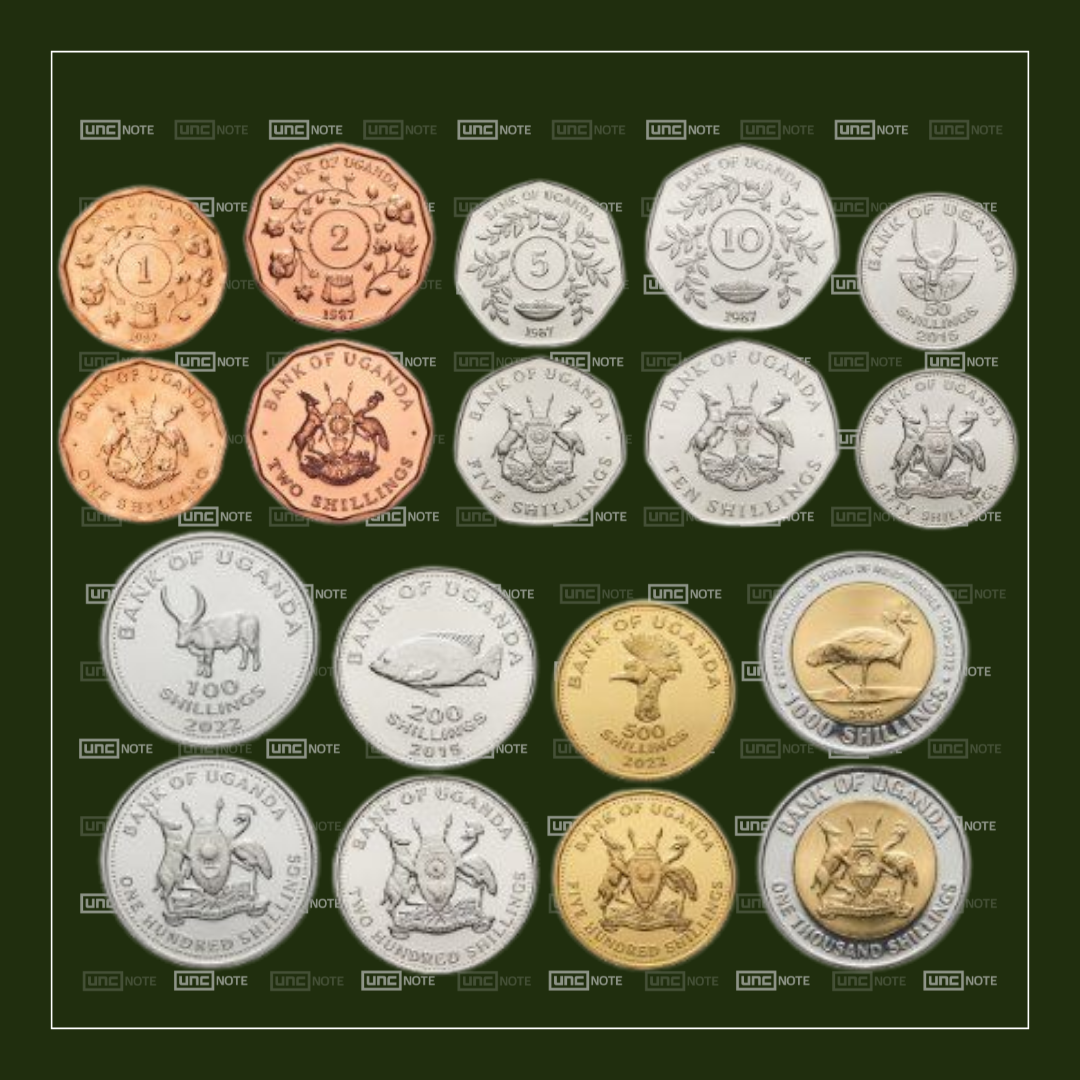
Uganda Complete Set of 9 Coins 1–1000 Shillings 1987–2022 KM 27–278 UNC
The Uganda 1987–2022 complete set of 9 coins brings together nine Shilling denominations covering more than three decades of the country’s modern coinage.
The set contains:
| Denomination | Period | Condition |
|---|---|---|
| 1 Shilling | 1987–2022 series | UNC |
| 2 Shillings | 1987–2022 series | UNC |
| 5 Shillings | 1987–2022 series | UNC |
| 10 Shillings | 1987–2022 series | UNC |
| 50 Shillings | 1987–2022 series | UNC |
| 100 Shillings | 1987–2022 series | UNC |
| 200 Shillings | 1987–2022 series | UNC |
| 500 Shillings | 1987–2022 series | UNC |
| 1000 Shillings | 1987–2022 series | UNC |
The denomination progression is particularly impressive:
1 → 2 → 5 → 10 → 50 → 100 → 200 → 500 → 1000 Shillings
Historical Background
Uganda introduced its first national Shilling in 1966, replacing the East African Shilling following independence.
A major monetary reform took place in 1987, when a new Ugandan Shilling was introduced at:
1 new Shilling = 100 old Shillings
New coins and banknotes accompanied the reform. The earliest denominations represented in this set belong to this important stage of Uganda’s monetary history.
Over subsequent decades, inflation changed the denominations required for everyday transactions. Higher-value coins were progressively introduced, creating a fascinating progression from low denominations such as 1 Shilling to modern coins worth 500 and 1000 Shillings.
Evolution of Ugandan Coinage
This set is particularly interesting because it is not limited to a single year or series.
Instead, its nine denominations illustrate the evolution of Uganda’s circulating coinage between 1987 and 2022.
The lower denominations represent the monetary system established following the 1987 reform, while progressively higher denominations demonstrate how Uganda’s coinage developed as purchasing power and everyday monetary requirements changed.
This makes the set particularly suitable for collectors interested in currency evolution and monetary history, rather than simply obtaining coins from a single annual issue.
The Ugandan Shilling
The Ugandan Shilling, internationally represented by the currency code UGX, remains Uganda’s national currency.
Although historically divided into 100 Cents, fractional denominations eventually disappeared from everyday circulation.
Modern Ugandan currency therefore primarily uses Shilling denominations, with coins occupying an important role in lower-value transactions.
Nine Denominations in One Set
The principal attraction of this collection is its unusually broad denomination range.
Beginning with just 1 Shilling and reaching 1000 Shillings, the set provides a compact illustration of how Uganda’s circulating currency changed over approximately 35 years.
Rather than collecting the denominations individually, this set provides:
1, 2, 5, 10, 50, 100, 200, 500 and 1000 Shillings
together in UNC condition.
Designs and National Identity
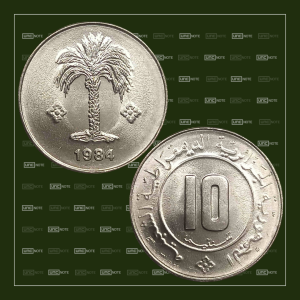
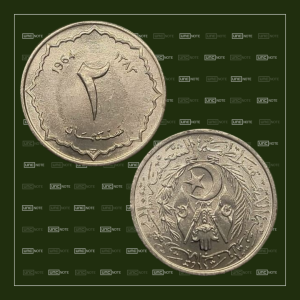
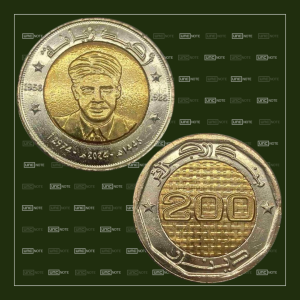
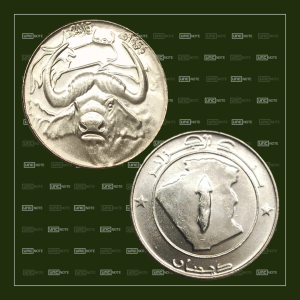
Ugandan coins have featured imagery connected with the country’s national identity, coat of arms and rich natural heritage.
Across the different series represented in this collection, changes in size, composition, denomination and design also provide a visual record of the development of Uganda’s modern monetary system.
The wide date range makes the differences between earlier and later generations particularly interesting when the coins are displayed together.
Why Add This Coin Set to Your Collection?
The Uganda Complete Set of 9 Coins 1–1000 Shillings 1987–2022 UNC offers significantly broader historical coverage than a conventional single-year set.
It combines:
9 different denominations
A range from 1 to 1000 Shillings
Approximately 35 years of monetary history
Uganda’s post-1987 currency system
Multiple generations of circulating coinage
UNC condition
It is an excellent addition for collectors specialising in Uganda, East African coins, Shilling currencies, monetary reforms and denomination sets.