Zimbabwe 50 ZiG Rhinoceros 2026 Pick 117 UNC Banknote
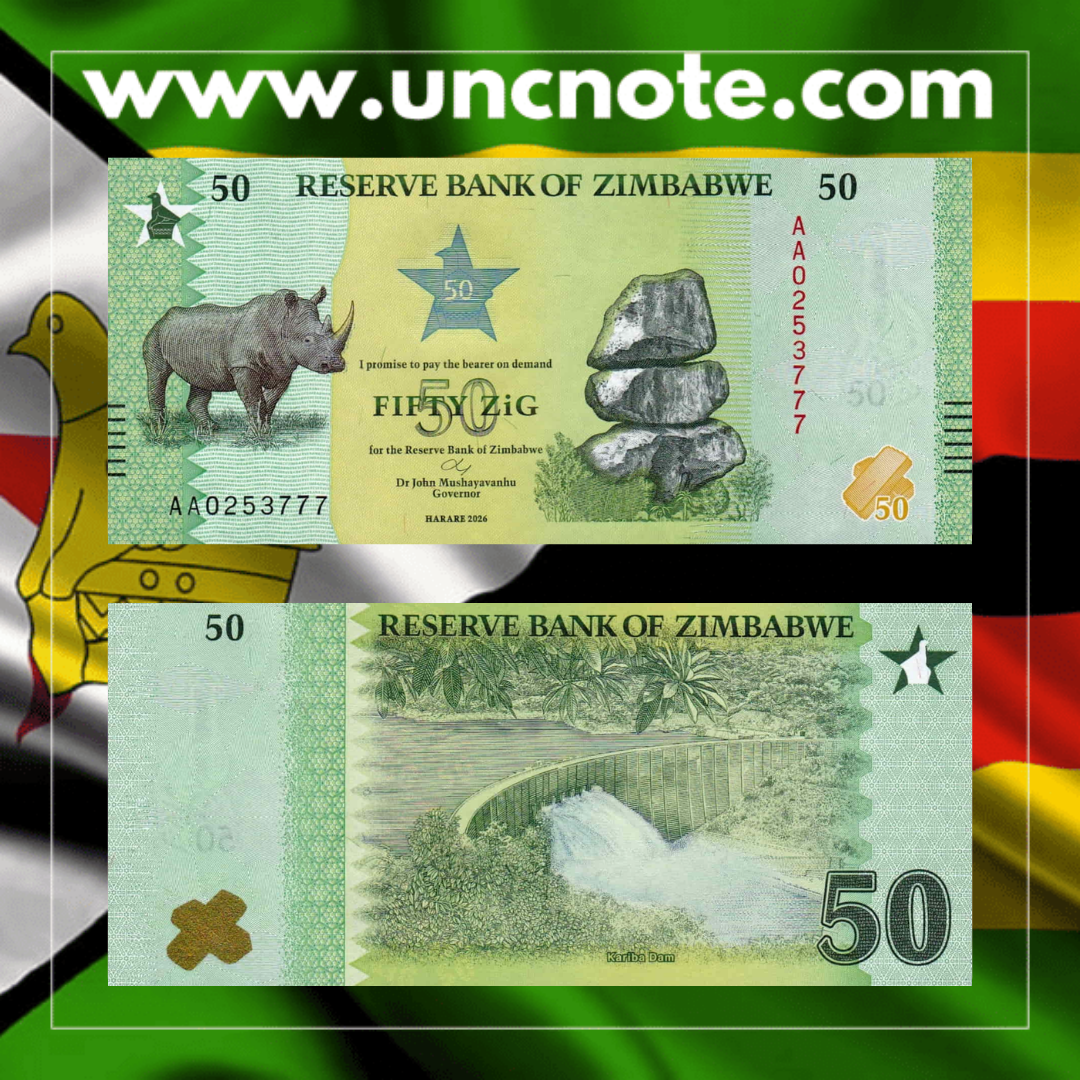
The Zimbabwe 50 ZiG 2026 Pick 117 is a modern African banknote featuring the rhinoceros, one of the most recognisable and endangered large mammals in Africa.
Issued under Zimbabwe’s Zimbabwe Gold (ZiG) monetary system, this denomination represents a recent chapter in the country’s currency history.
Zimbabwe introduced ZiG in April 2024, replacing the previous Zimbabwean Dollar as part of a monetary reform intended to improve financial stability and confidence in the national currency.
The 2026 rhinoceros-themed issue, identified by the supplier as Pick 117, celebrates Zimbabwe’s natural heritage while reflecting the development of its modern monetary system.
Zimbabwe is home to both black and white rhinoceroses, two species that have become important symbols of African wildlife conservation.
Preserved in uncirculated condition, this banknote is an appealing addition to collections of African paper money, wildlife-themed currency and contemporary monetary issues.
Historical Background
Zimbabwe gained independence on 18 April 1980, following the end of white-minority rule in Rhodesia.
The country introduced the Zimbabwean Dollar in 1980, replacing the Rhodesian Dollar.
During the following decades, Zimbabwe experienced substantial economic challenges, including inflation, currency depreciation and repeated monetary reforms.
The situation became particularly severe during the hyperinflation crisis of 2007–2008, when the Reserve Bank of Zimbabwe issued banknotes with denominations reaching billions and trillions of Dollars.
In 2009, the Zimbabwean Dollar was effectively abandoned in favour of foreign currencies.
A new Zimbabwean Dollar was introduced in 2019, but inflation and currency instability continued.
On 5 April 2024, the Reserve Bank of Zimbabwe announced the introduction of Zimbabwe Gold (ZiG).
The currency was presented as a monetary system supported by reserve assets, including gold and foreign currencies.
The 50 ZiG 2026 banknote belongs to the period following this important monetary reform.
Banknote Specifications
| Feature | Details |
|---|---|
| Country | Zimbabwe |
| Issuing authority | Reserve Bank of Zimbabwe |
| Denomination | 50 ZiG |
| Year | 2026 |
| Catalogue reference supplied | Pick 117 |
| Currency | Zimbabwe Gold |
| Currency abbreviation | ZiG |
| ISO currency code | ZWG |
| Condition | Uncirculated (UNC) |
| Type | Banknote |
| Featured wildlife | Rhinoceros |
| Monetary system | Zimbabwe Gold |
| Region | Southern Africa |
| Currency introduced | April 2024 |
The 2026 issue date, rhinoceros design and Pick 117 reference are supplier-provided details and should be verified against the physical specimen or an updated catalogue. “Nuevo” is not part of the Pick number.
Obverse
The obverse of Zimbabwe’s ZiG banknotes incorporates national symbols associated with the country’s historical and natural heritage.
One of the most recognisable motifs on Zimbabwean currency is the Chiremba Balancing Rocks, a distinctive geological formation located near Harare.
These rocks have appeared on several generations of Zimbabwean banknotes and have become a familiar symbol of the country’s monetary identity.
The banknote includes the denomination of 50 Zimbabwe Gold, official inscriptions and security elements.
The exact obverse layout, signatures and security characteristics of the 2026 Pick 117 variety should be confirmed against the physical specimen.
Reverse
The reverse is identified by the supplier as featuring a rhinoceros.
Rhinoceroses are among the most recognisable animals associated with African wildlife and conservation.
Zimbabwe is home to two African rhinoceros species: the black rhinoceros (Diceros bicornis) and the white rhinoceros (Ceratotherium simum).
Both species have been affected by habitat loss and poaching, making their conservation particularly important.
The rhinoceros is also one of Africa’s famous Big Five animals.
Its inclusion on Zimbabwean currency highlights the country’s natural heritage and the importance of wildlife protection.
The precise rhinoceros species, illustration and additional reverse details should be verified against the physical banknote.