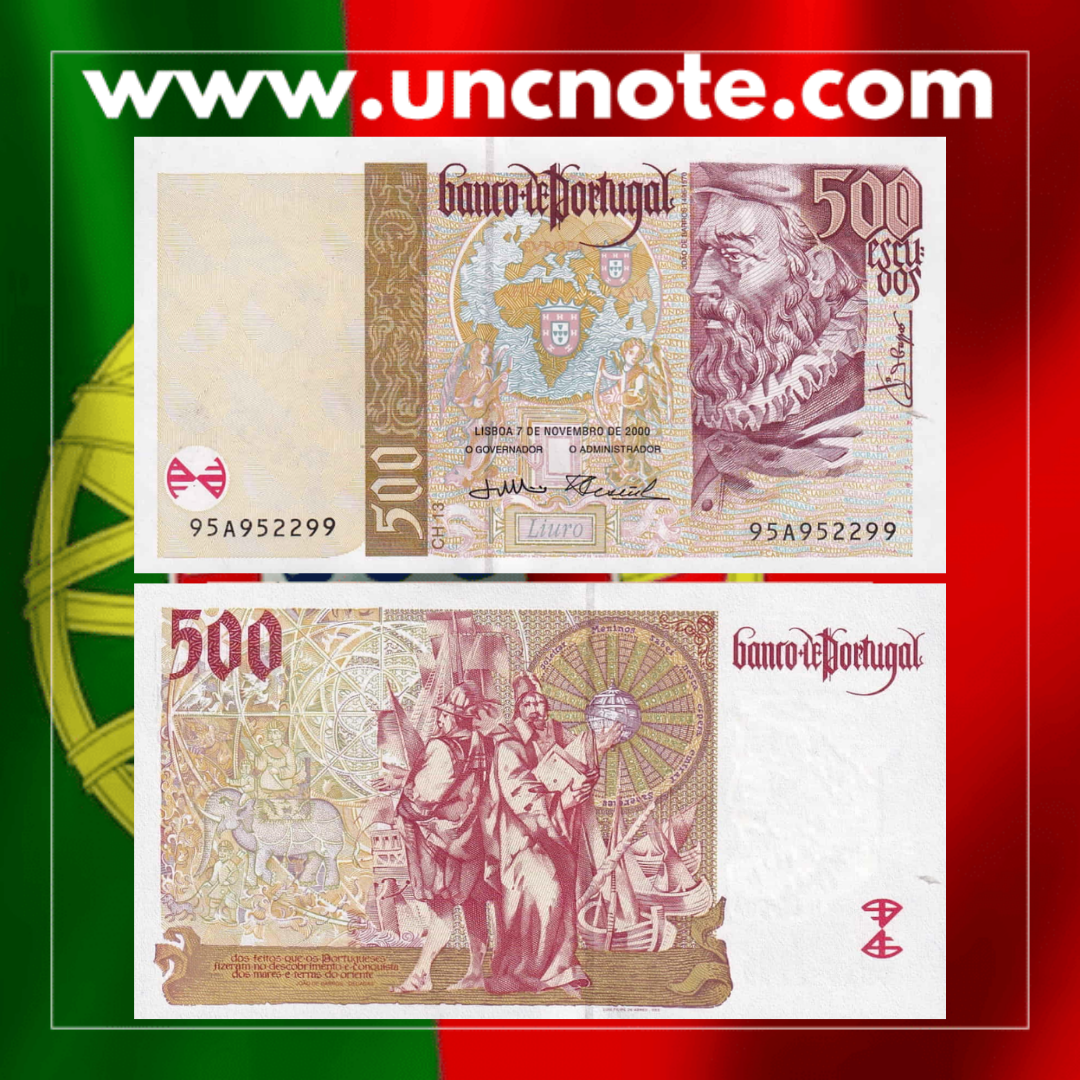
Portugal 500 Escudos João de Barros 2000 Pick 187c UNC Banknote
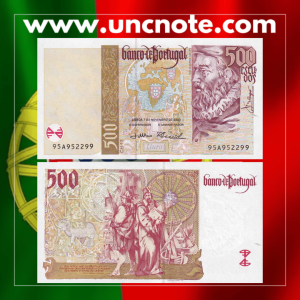
The Portugal 500 Escudos 2000 Pick 187c is a historic banknote issued by the Banco de Portugal, featuring João de Barros, an important figure in sixteenth-century Portuguese literature and historiography.
Issued shortly before Portugal’s transition to euro cash, this banknote represents one of the country’s final Escudo issues.
Its portrait of João de Barros and imagery inspired by Portugal’s maritime history make it a distinctive collectible from the country’s pre-euro monetary system.
Historical Background
The Portuguese Escudo was introduced in 1911, following the establishment of the Portuguese Republic, replacing the Real as the country’s national currency.
Throughout the twentieth century, Portuguese banknotes featured important historical personalities associated with the country’s literature, science, exploration and cultural heritage.
The 500 Escudos denomination honoured João de Barros, whose historical writings documented Portuguese maritime expansion during the sixteenth century.
Portugal adopted the euro for accounting and electronic transactions in 1999, with euro banknotes and coins entering circulation on 1 January 2002.
The 2000 issue therefore belongs to the final years of the Portuguese Escudo.
Banknote Specifications
| Feature | Details |
|---|---|
| Country | Portugal |
| Issuer | Banco de Portugal |
| Denomination | 500 Escudos |
| Year | 2000 |
| Catalogue number | Pick 187c |
| Currency | Portuguese Escudo (PTE) |
| Condition | Uncirculated (UNC) |
| Material | Paper |
| Featured personality | João de Barros |
| Historical period | Pre-euro Portugal |
| Region | Southern Europe |
Obverse

The obverse features a portrait of João de Barros, accompanied by the denomination and inscriptions identifying the Banco de Portugal.
The design incorporates decorative elements inspired by Portugal’s historical and artistic heritage, reflecting the country’s tradition of commemorating prominent cultural figures on its banknotes.
Reverse

The reverse features imagery inspired by Portugal’s maritime history and the era of overseas exploration.
Its artistic composition complements João de Barros’s portrait, reflecting his work documenting Portuguese voyages and encounters during the sixteenth century.
João de Barros
João de Barros (circa 1496–1570) was a Portuguese historian, writer and royal administrator.
He is particularly remembered for Décadas da Ásia, an extensive historical account of Portuguese expansion in Asia.
His writings are important historical sources for the study of Portugal’s maritime activities during the sixteenth century.
His portrait on the 500 Escudos banknote recognises his contribution to Portuguese literature and historiography.
The Portuguese Escudo and the Euro
The Escudo served as Portugal’s national currency from 1911 until the introduction of euro cash in 2002.
The official conversion rate was:
1 Euro = 200.482 Escudos
At this fixed rate, 500 Escudos corresponded to approximately €2.49.
Although Escudo banknotes are no longer legal tender, the Banco de Portugal continues to exchange eligible banknotes from its final series under its applicable redemption arrangements.
Why Add This Banknote to Your Collection?
The Portugal 500 Escudos 2000 P187c UNC banknote combines several popular collecting themes: pre-euro European currency, Portuguese maritime history, historical personalities and discontinued banknote denominations.
Its connection to Portugal’s final Escudo series makes it particularly suitable for collectors documenting the transition from national European currencies to the euro.
The uncirculated condition preserves the note’s original crispness, colours and intricate printed details.