
Bretton Woods System Explained: How Gold Shaped Modern Currency
Introduction
The Bretton Woods system was one of the most important turning points in modern financial history. Established in 1944, it created a global monetary framework that linked currencies to gold and defined how money would function for decades.
For banknote collectors, understanding Bretton Woods is essential. It explains why modern banknotes exist as they do today and why older currencies tied to gold are historically significant.
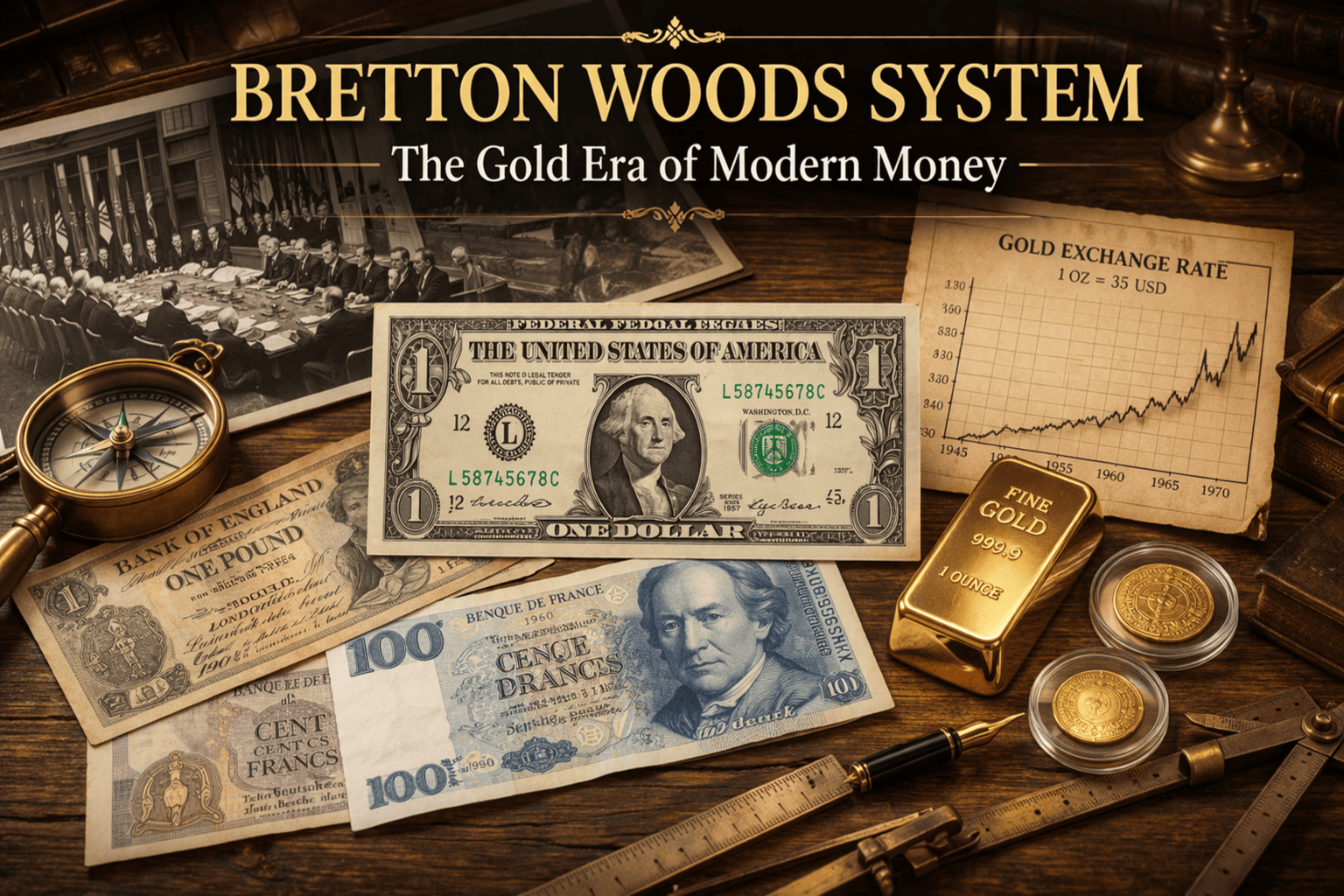
Table of Contents
- What Was the Bretton Woods System
- Why It Was Created
- How Gold Backed Currencies
- The Role of the US Dollar
- The Collapse of Bretton Woods
- How It Changed Modern Banknotes
- Why It Matters for Collectors
What Was the Bretton Woods System?
The Bretton Woods system was an international agreement created after World War II to stabilize the global economy.
Under this system:
- Currencies were pegged to the US dollar
- The US dollar was backed by gold
- Governments could exchange dollars for gold
This created a stable and predictable financial system for international trade.
Why It Was Created
After the economic chaos of the Great Depression and World War II, countries needed stability.
The goals of Bretton Woods were:
- Prevent currency devaluation wars
- Promote global trade
- Stabilize exchange rates
- Rebuild the international economy
This system laid the foundation for modern global finance.
How Gold Backed Currencies
Gold played a central role in Bretton Woods.
Instead of every currency being backed directly by gold:
- The US dollar was linked to gold
- Other currencies were linked to the dollar
💥 This made the dollar the most important currency in the world.
At the time:
👉 1 ounce of gold = 35 USD
The Role of the US Dollar
The Bretton Woods system made the US dollar the global reserve currency.
This meant:
- Countries held dollars instead of gold
- International trade was conducted in dollars
- The US gained massive financial influence
This is why many historical banknotes are tied to the strength of the US economy.
The Collapse of Bretton Woods
By the late 1960s, the system began to fail.
Reasons included:
- Too many dollars in circulation
- Declining gold reserves
- Economic pressure on the US
In 1971, President Nixon ended the gold convertibility of the dollar.
👉 This event is known as the “Nixon Shock”
💥 After this:
Currencies became fiat money (not backed by gold)
How It Changed Modern Banknotes
The end of Bretton Woods transformed how banknotes work.
Before:
- Money had a direct or indirect link to gold
After:
- Money is based on trust and government backing
This shift explains why modern banknotes:
- Have no intrinsic value
- Depend on economic stability
- Are designed differently
Why It Matters for Banknote Collectors
For collectors, Bretton Woods is key to understanding:
Historical Banknotes
Notes issued before 1971 are tied to a gold-based system.
Design Evolution
Banknotes changed significantly after the system ended.
Rarity and Value
Older notes from this period can be historically important and collectible.
Economic Context
Understanding the system adds depth to any collection.
Explore Historical and Uncirculated Banknotes
If you are interested in the history of global currency, explore our collection of uncirculated banknotes from around the world.
👉 Discover notes from different eras, countries, and economic systems: 🔗UNCNOTE.COM
Conclusion
The Bretton Woods system shaped the modern financial world and influenced how banknotes are designed, valued, and used today.
For collectors, it represents a critical period in monetary history—one that connects gold-backed currency to the modern fiat system.
Understanding Bretton Woods not only improves your knowledge but also enhances the meaning and value behind every banknote in your collection.
Related Articles
- Top Tips for Collecting Uncirculated Banknotes
- What Does UNC Mean in Banknote Collecting
- Beginner’s Guide to Collecting Banknotes