
Queen Elizabeth II Banknotes: History, Design and Collecting Guide
Introducción
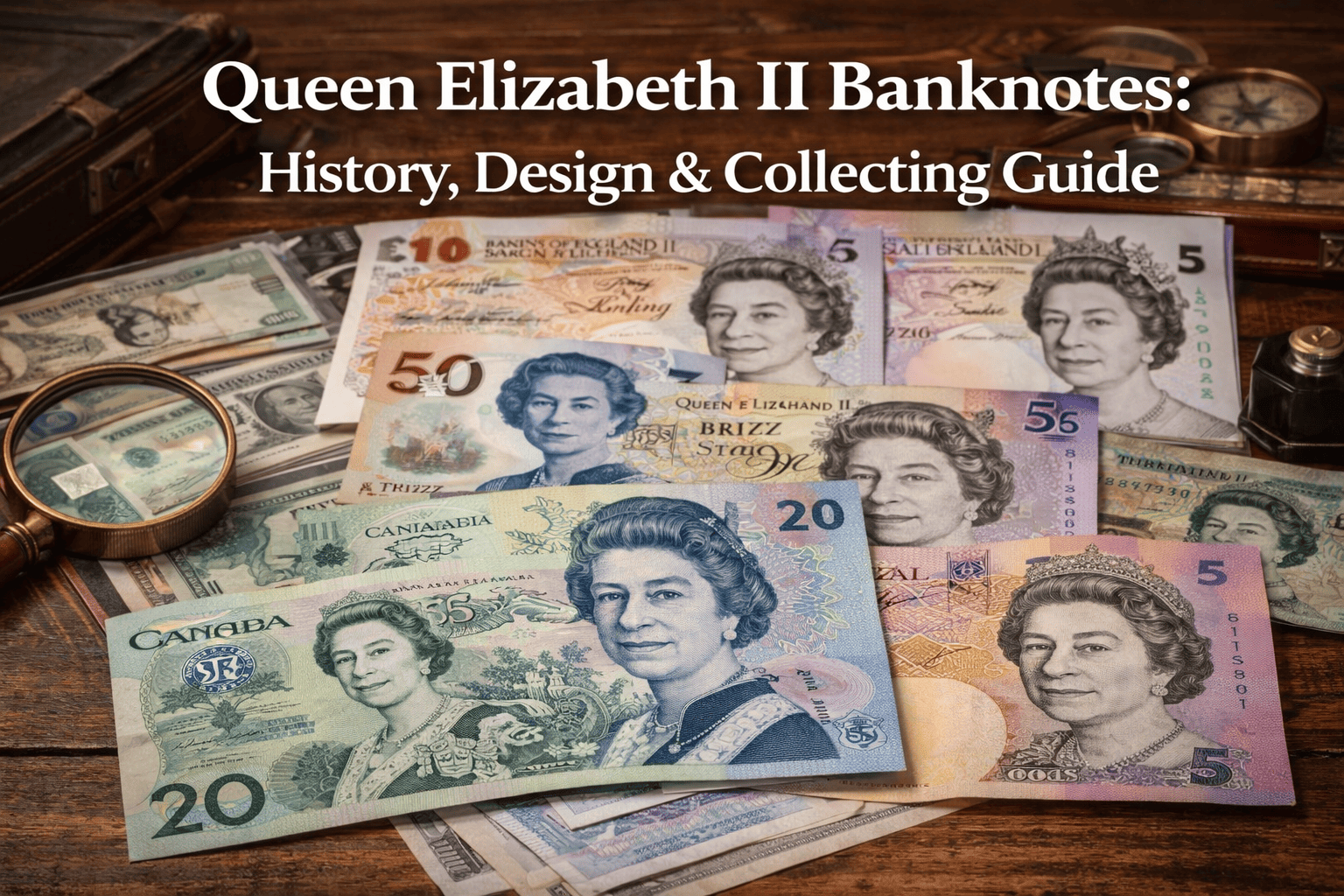
Queen Elizabeth II banknotes are among the most recognizable and widely collected pieces of modern currency. As the longest-reigning monarch in British history, Queen Elizabeth II appeared on banknotes across multiple countries and continents, making her the most featured person on modern paper money.
For collectors, these banknotes are not only valuable from a numismatic perspective but also serve as historical artifacts that reflect decades of political stability, cultural identity, and evolving design.
From the United Kingdom to Commonwealth nations, Queen Elizabeth II banknotes represent one of the most important themes in modern banknote collecting.
Índice
- The First Appearance of Queen Elizabeth II on Banknotes
- Countries Featuring Queen Elizabeth II Banknotes
- Evolución del diseño de los billetes
- Security Features in Modern Notes
- Why Collect Queen Elizabeth II Banknotes
- Investment and Future Value
- How to Build a Collection
The First Appearance of Queen Elizabeth II on Banknotes
Queen Elizabeth II first appeared on banknotes shortly after her accession to the throne in 1952. Early designs featured a young portrait of the Queen, symbolizing a new era for the United Kingdom and the Commonwealth.
Over time, her image evolved to reflect different stages of her life:
- Young Queen portrait (1950s–1960s)
- Mature Queen portrait (1970s–1990s)
- Modern official portrait (2000s–2020s)
Each version offers collectors a unique way to trace history through currency.
Countries Featuring Queen Elizabeth II Banknotes
One of the most fascinating aspects of Queen Elizabeth II banknotes is their global presence.
Countries that have featured her portrait include:
United Kingdom
The Bank of England has issued multiple series featuring Queen Elizabeth II, from classic paper notes to modern polymer banknotes.
Canadá
Canadian banknotes have included different portraits of the Queen across several generations of currency.
Australia
Australia was one of the first countries to adopt polymer banknotes, many featuring Queen Elizabeth II.
Nueva Zelanda
New Zealand banknotes prominently display the Queen alongside national symbols.
Caribbean Nations
Several Caribbean countries have issued colorful banknotes featuring Queen Elizabeth II.
Evolución del diseño de los billetes
The design of Queen Elizabeth II banknotes has evolved significantly over the decades.
Early Designs
Simple, traditional layouts with minimal color variation and basic security features.
Modern Designs
Highly detailed notes with:
- Advanced color printing
- Complex backgrounds
- Cultural elements
- National landmarks
Polymer Era
Modern banknotes now use polymer material, allowing:
- Transparent windows
- Enhanced durability
- Innovative security elements
Security Features in Modern Notes
Modern Queen Elizabeth II banknotes include sophisticated security features:
- Marcas de agua
- Hilos de seguridad
- Microimpresión
- Hologramas
- Tintas que cambian de color
These features make modern banknotes both secure and visually appealing for collectors.
Why Collect Queen Elizabeth II Banknotes
Collectors around the world are drawn to Queen Elizabeth II banknotes for several reasons:
Historical Significance
They represent one of the longest reigns in modern history.
Global Variety
Few figures appear on as many different currencies worldwide.
Design Evolution
Collectors can trace changes in design, technology, and artistic style.
Accessibility
Many Queen Elizabeth II banknotes are affordable, making them ideal for beginners.
Rarity
Certain older issues, special editions, or uncirculated notes can be rare and valuable.
Investment and Future Value
Following the passing of Queen Elizabeth II in 2022, her banknotes have gained increased interest among collectors.
As new banknotes featuring King Charles III are introduced, Queen Elizabeth II banknotes are gradually being replaced.
This transition creates:
- Increased demand
- Importancia histórica
- Potential long-term value
Uncirculated (UNC) Queen Elizabeth II banknotes are particularly desirable, as they preserve original condition and detail.
How to Build a Collection
Building a collection of Queen Elizabeth II banknotes can be both enjoyable and rewarding.
Start with Different Countries
Collect notes from the UK, Canada, Australia, and beyond.
Focus on Condition
Prioritize uncirculated banknotes for maximum value.
Explore Different Series
Look for variations in design across decades.
Organize Your Collection
Group by country, year, or portrait type.
Use Proper Storage
Protect notes with acid-free sleeves and store them in a dry, dark environment.
Explore Queen Elizabeth II Banknotes
If you are looking to start or expand your collection, explore our curated selection of uncirculated banknotes from around the world.
Discover historical designs, rare issues, and beautifully preserved notes that celebrate the legacy of Queen Elizabeth II.
Conclusión
Queen Elizabeth II banknotes are more than just currency—they are symbols of history, continuity, and global influence. With her portrait appearing on banknotes across multiple countries and decades, these notes offer collectors a unique opportunity to explore modern history through currency.
Whether you are a beginner or an experienced collector, building a collection of Queen Elizabeth II banknotes is a meaningful and valuable journey.
Start your collection today and discover one of the most iconic themes in the world of banknote collecting.
Artículos relacionados
- ¿Qué significa «UNC» en el coleccionismo de billetes?
- Guía para principiantes sobre el coleccionismo de billetes
- Los mejores consejos para coleccionar billetes sin circular