
Que signifie « UNC » dans le domaine de la numismatique ?
UNC banknotes are one of the most important concepts in the world of numismatics. In banknote collecting, condition plays a key role in determining both value and desirability.
The term UNC stands for uncirculated, meaning the banknote has never been used in everyday transactions. Understanding UNC banknotes is essential for both beginners and experienced collectors who want to build a high-quality collection.
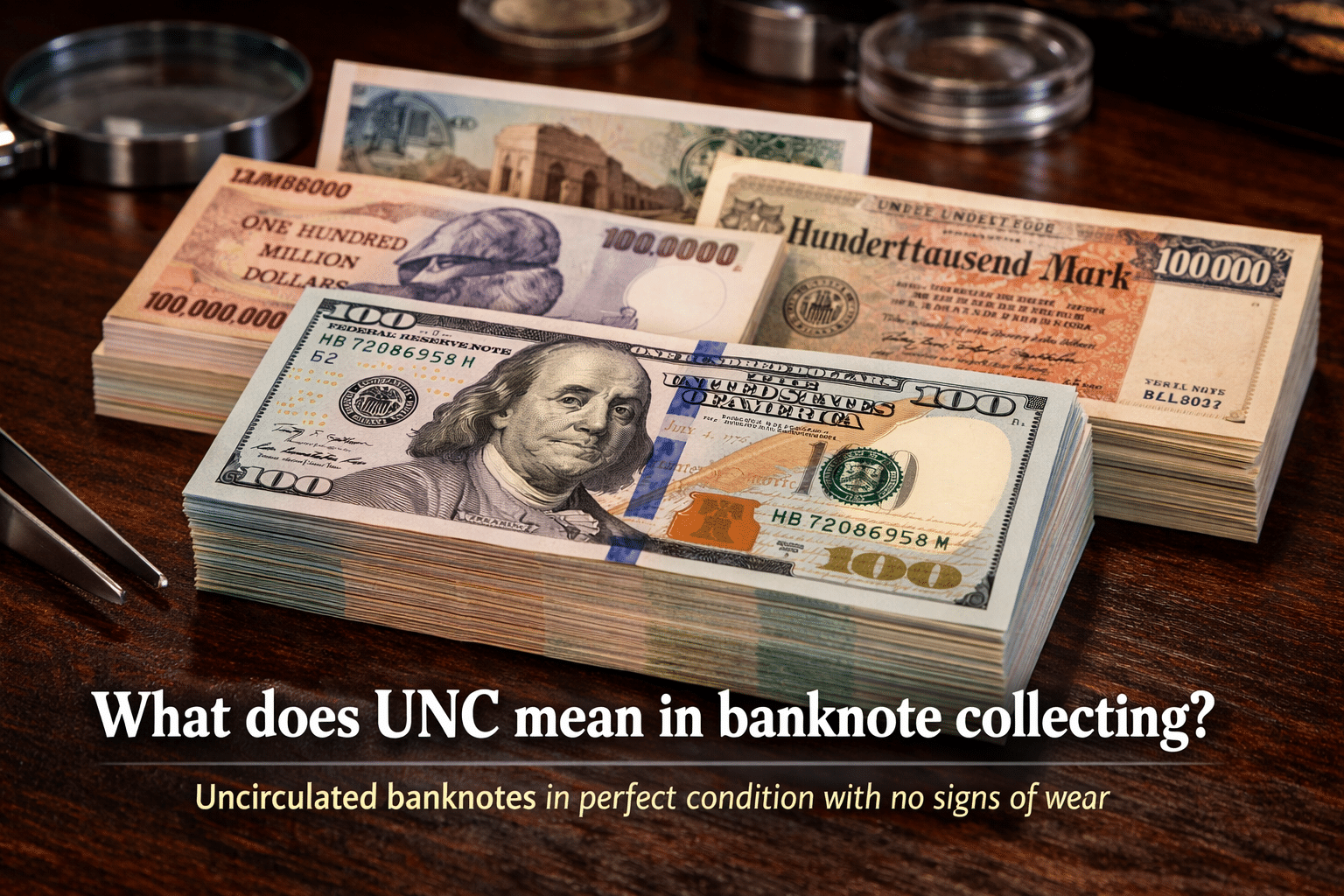
Table des matières
- What Is an Uncirculated Banknote
- UNC par rapport aux autres notes
- Why Collectors Prefer UNC Banknotes
- How to Identify True UNC Notes
- Tips for Buying UNC Banknotes
Qu'est-ce qu'un billet de banque non mis en circulation (UNC) ?
UNC banknotes are notes that have never entered circulation and remain in their original condition.
Key characteristics include:
- Coins nets et intacts
- Papier original, impeccable
- Pas de plis, de taches ou de marques de manipulation
- Full print detail and vibrant colors
UNC banknotes represent the note exactly as issued by the central bank, making them highly desirable for collectors.
UNC par rapport aux autres notes
Understanding grading is essential when comparing UNC banknotes to other conditions.
| Note | Description |
|---|---|
| UNC (Non circulé) | Parfait, jamais utilisé, en parfait état |
| AU (Presque neuf) | Manipulation mineure, légères traces de contact |
| XF (Extrêmement fin) | Plis légers ou manipulations mineures |
| VF (Très bon état) ou moins | Circulation visible, plis, usure |
While lower grades can still be collectible, UNC banknotes are considered the highest standard.
Why Collectors Prefer UNC Banknotes
Collectors prefer UNC banknotes for several important reasons:
- Maximum Visual Appeal: Uncirculated notes maintain their original beauty, colors, and sharpness.
- Long-Term Preservation: UNC banknotes are ideal for archival storage and long-term collecting.
- Higher Market Demand: Collectors and investors prioritize UNC banknotes, making them easier to sell.
- Reference Quality: They serve as perfect examples when comparing other notes.
For modern banknotes, UNC condition is often considered essential.
How to Identify True UNC Banknotes
Not all banknotes labeled as UNC are truly uncirculated.
To verify authenticity:
- Check for perfectly sharp corners
- Ensure there are no folds or bends
- Look for crisp paper texture
- Inspect under light for hidden damage
Even small imperfections can reduce a note from UNC to a lower grade.
Tips for Buying UNC Banknotes
When purchasing UNC banknotes, follow these best practices:
- Buy from reputable dealers or specialized stores
- Avoid suspiciously cheap offers
- Check detailed photos before buying
- Compare with verified catalog descriptions
Buying carefully ensures you receive genuine uncirculated banknotes.
Why UNC Banknotes Are the Standard for Collectors
UNC banknotes are considered the benchmark in banknote collecting because they preserve the original condition and design of the currency.
Collectors who focus on UNC banknotes build collections that are more consistent, valuable, and visually appealing over time.
How UNC Condition Affects Banknote Value
Understanding what UNC means is essential because condition directly impacts value. Banknotes in UNC condition are always more desirable than circulated examples.
Collectors and investors prefer uncirculated notes because they maintain their original appearance and are easier to resell in the future.
Conclusion
Understanding UNC banknotes is essential for anyone interested in banknote collecting. These notes represent the highest standard of quality, offering both aesthetic beauty and long-term value.
By focusing on uncirculated banknotes, collectors can build a collection that is both impressive and financially rewarding.
Explore premium UNC banknotes at UNCNOTE and start building your collection with confidence.
Articles connexes
- Les meilleurs conseils pour collectionner les billets de banque non mis en circulation
- Guide du débutant pour collectionner les billets de banque
- Comment constituer une collection de billets de banque de valeur